Professional Pilot Profile


Every flight department, charter operator, and insurance broker asks the same question when a pilot is proposed for a trip:
“Are they qualified to fly this aircraft?”
The answer to that question has traditionally lived in scattered documents. PDFs emailed back and forth. Old spreadsheets. Training certificates. Insurance questionnaires filled out again and again.
It works. But it’s slow. And it leaves too much room for interpretation.
So we rebuilt the foundation.
Flying Company now gives pilots two powerful tools that formalize how professional aviators present their experience — and how operators assess it — all in one place.
The Newly Designed Pilot History Form
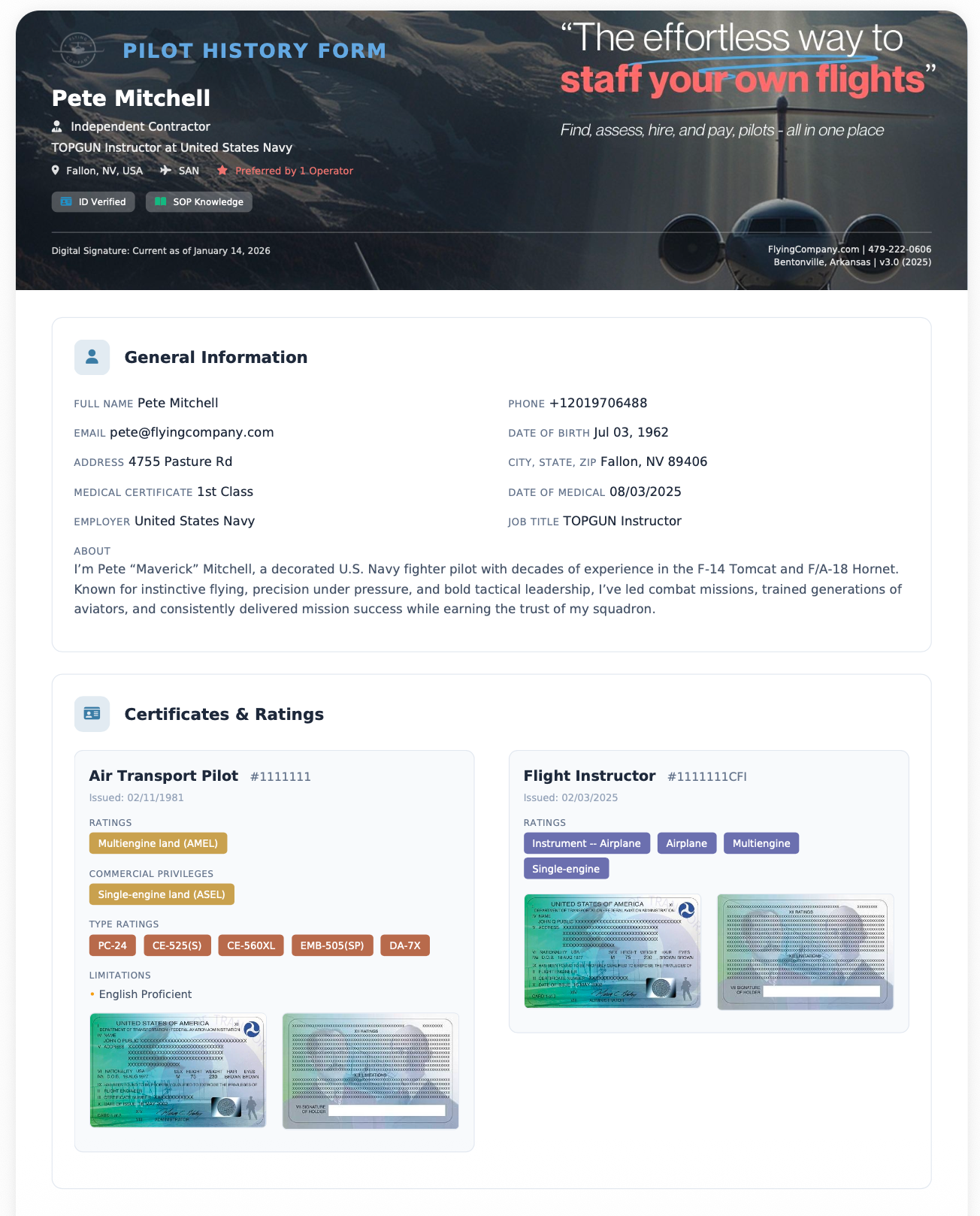
The Pilot History Form is the industry’s lingua franca. It’s the document insurance brokers, underwriters, and flight departments rely on to determine whether a pilot meets the operational and insurance requirements for a specific aircraft.
We’ve redesigned it from the ground up.
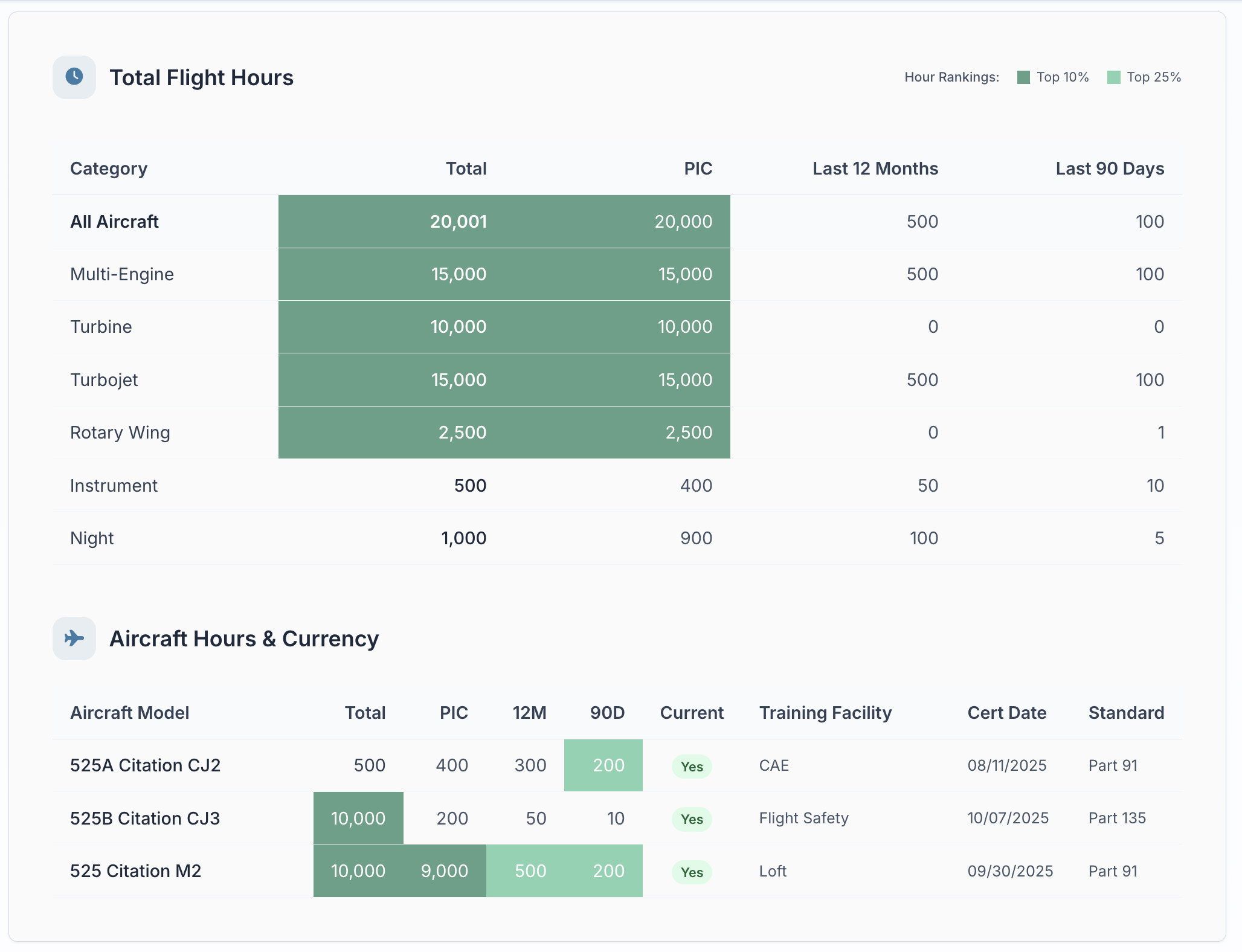
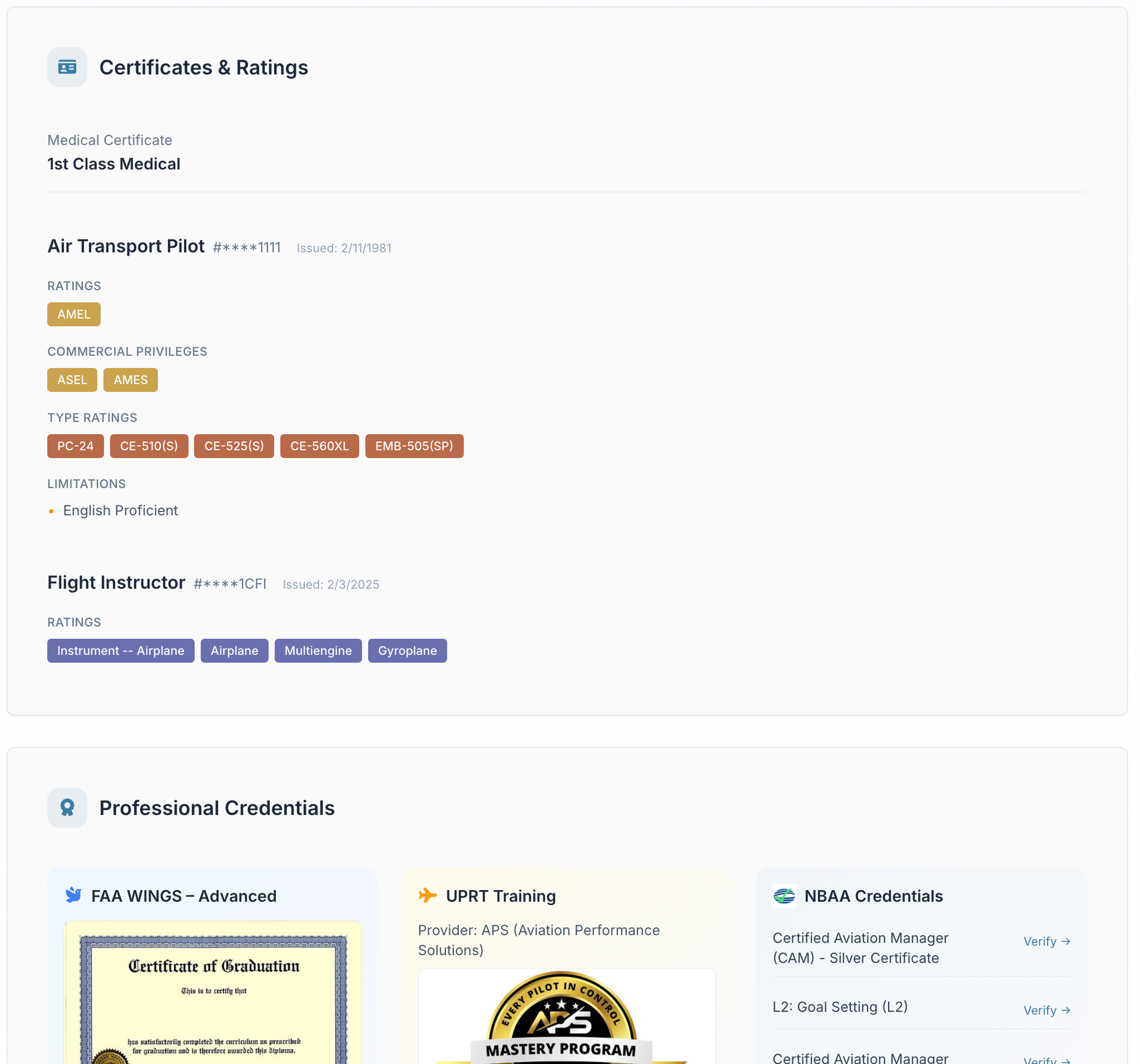
Every pilot on Flying Company automatically has a digital Pilot History Form generated from their profile. It captures the information that matters most: certificates and ratings, medical status, total and recent flight hours, aircraft-specific experience, training history, professional credentials, and the standard disclosure questions insurers expect.
When a pilot submits a quote on a trip, operators can download that form directly from the platform. No emails. No chasing attachments. No wondering if the document is current.
Pilots can also download their Pilot History Form at any time and share it outside the platform — with insurance brokers, flight departments, or management companies — even for trips not run through Flying Company. It becomes a living, always-current record of their professional qualifications.
The result is simple: faster evaluations, fewer delays, and clearer risk decisions.
NEW: The Professional Pilot Profile
We also realized something else. Pilots need more than a form. They need a professional presence.
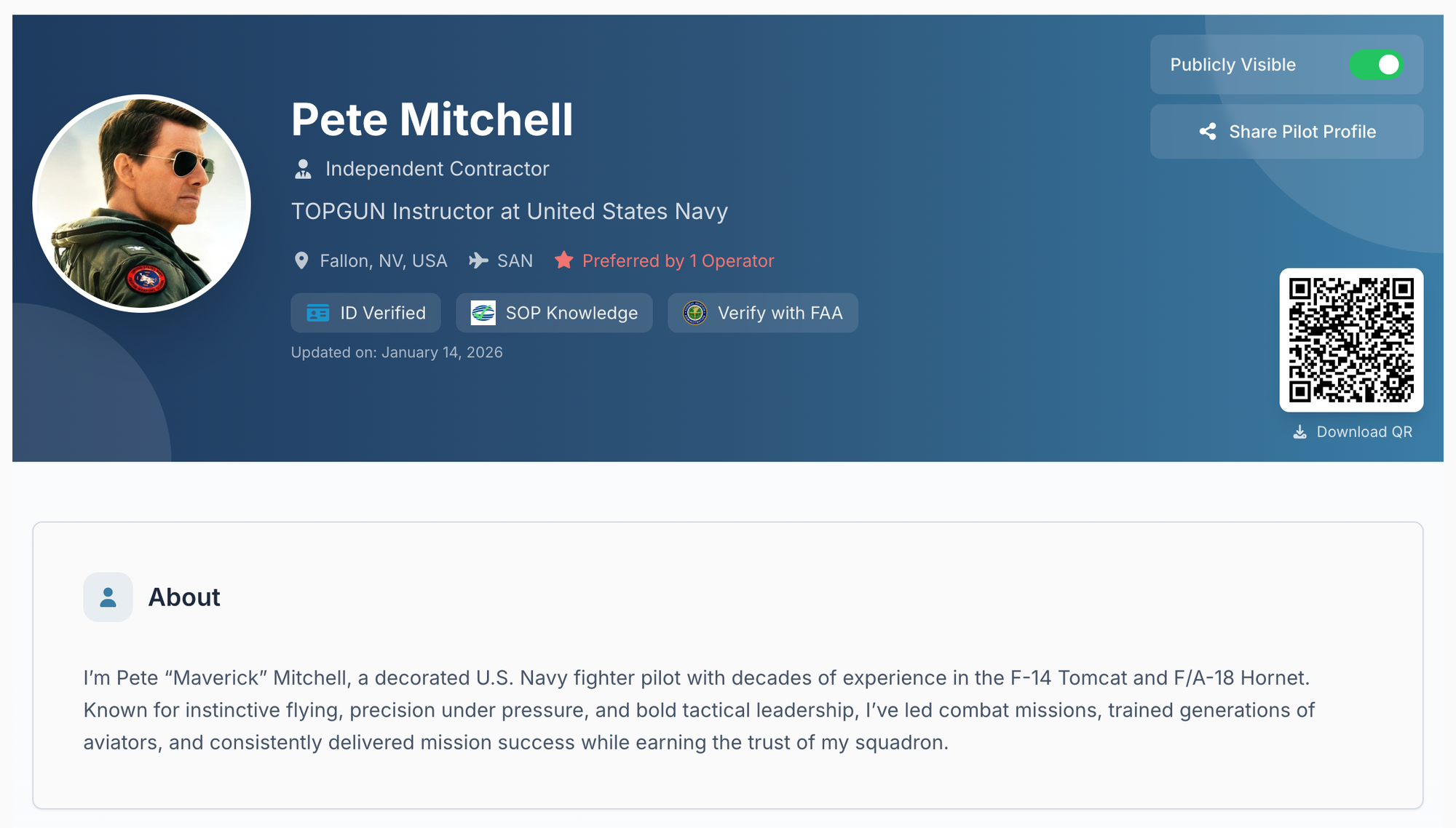
Every pilot on Flying Company now gets a dedicated Professional Pilot Profile — a unique URL that acts as their aviation résumé and professional landing page. It presents their experience, credentials, training, and verification status in a clean, modern format designed specifically for business aviation.
Pilots can choose to make this page publicly visible or keep it private. If they want to share it with an operator, broker, or chief pilot, they simply send the link. No PDFs. No reformatting. No confusion.
There’s even a downloadable QR code, making it easy to place on business cards or conference badges. Meet an operator at a show, let them scan, and your full professional profile is instantly in their hands.
And if an operator likes what they see, they can add that pilot as a Preferred Pilot directly from the page. From that point forward, that pilot is prioritized for future trip notifications. No follow-up emails required. No manual list building. Just a clean connection formed on the spot.
Why This Matters
For pilots, this is about presenting themselves the way high-end operators expect to see professional aviation vendors presented — organized, verified, and current.
For operators, this is about reducing uncertainty. Instead of piecing together qualification data from multiple sources, they get a standardized view of pilot experience, backed by downloadable forms and verified credentials.
For dispatchers and schedulers, it’s about eliminating repetitive admin work. No more requesting history forms. No more verifying whether training is current. No more reconciling mismatched documents.
And for insurance brokers and underwriters, it provides exactly the information they need, in exactly the format they expect, every time.
Built for Safety, Transparency, and Trust
Aviation runs on trust. Trust that the pilot is qualified. Trust that the operator has done their diligence. Trust that the information being reviewed is accurate and current.
These tools don’t just make hiring easier. They make qualification clearer. They make preparation stronger. And they raise the baseline of professionalism across the entire contract pilot ecosystem.
This is how we move from informal networks and scattered documents to a real operational marketplace — where everyone is reading from the same sheet of music.
And where safety is supported by structure, not guesswork.