Introducing Pilot Credentials

In aviation, professionalism isn’t measured in hours alone. A pilot can have 10,000 hours and still lack discipline or adherence to best practices, while another with 2,000 hours might demonstrate exceptional judgment, safety awareness, and a commitment to continuous improvement. The difference isn’t just in experience — it’s in professionalism.
That’s why Flying Company is introducing a new Credentials section within every pilot’s profile — a dedicated place for verifiable, professional achievements that go beyond flight hours. This update builds on our mission to help Operators find not just available pilots, but the right pilots — those who embody skill, safety, and professionalism in every flight.
The Next Step Toward Measuring Professionalism
Our new Credentials feature lets pilots upload or link professional certifications that demonstrate their commitment to safety and growth. It’s part of a larger shift across business aviation: from judging pilots solely on hours to evaluating them on how they approach the job.
The Three Pillars of Professional Credentials
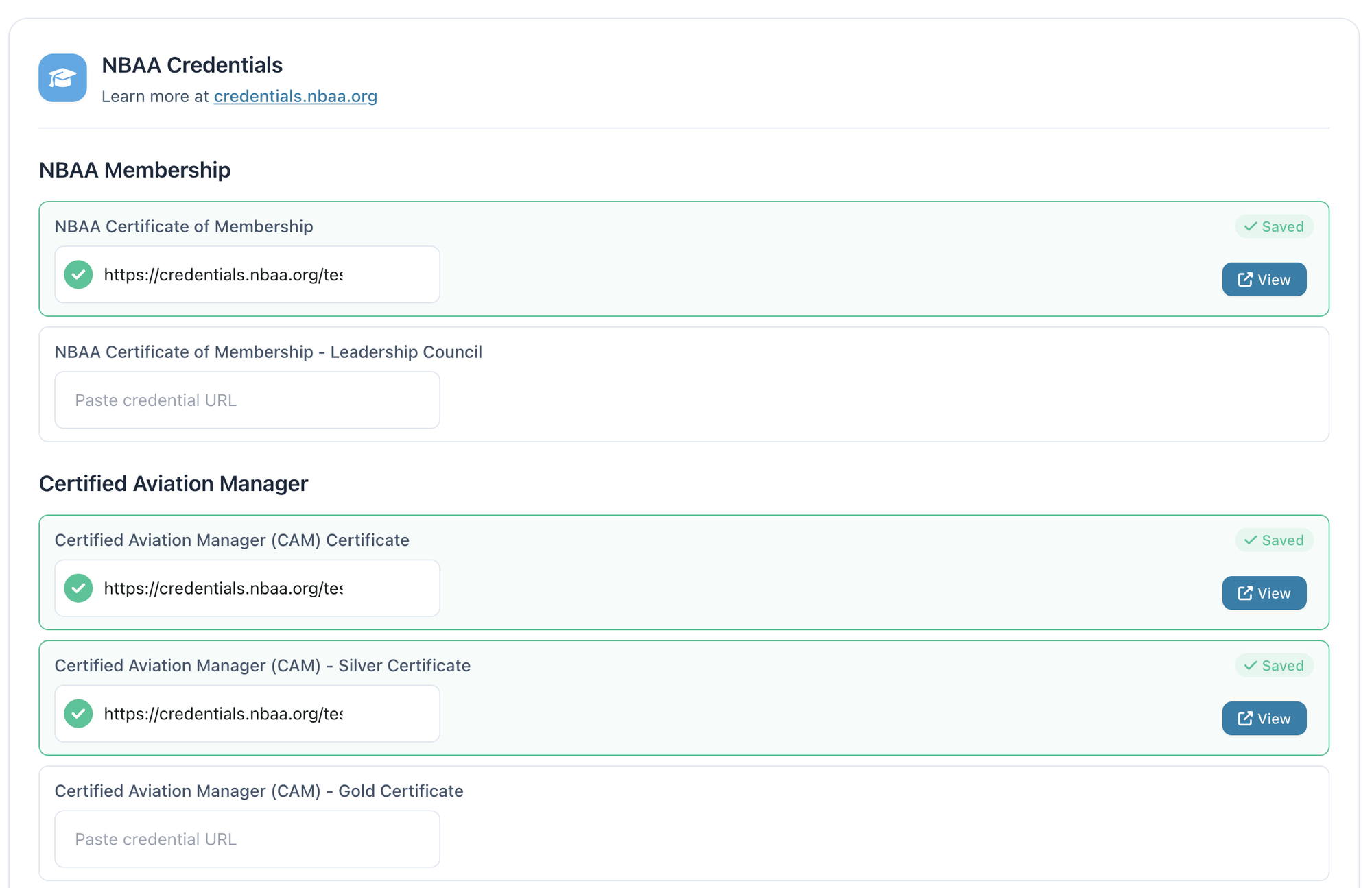
1. NBAA Certifications
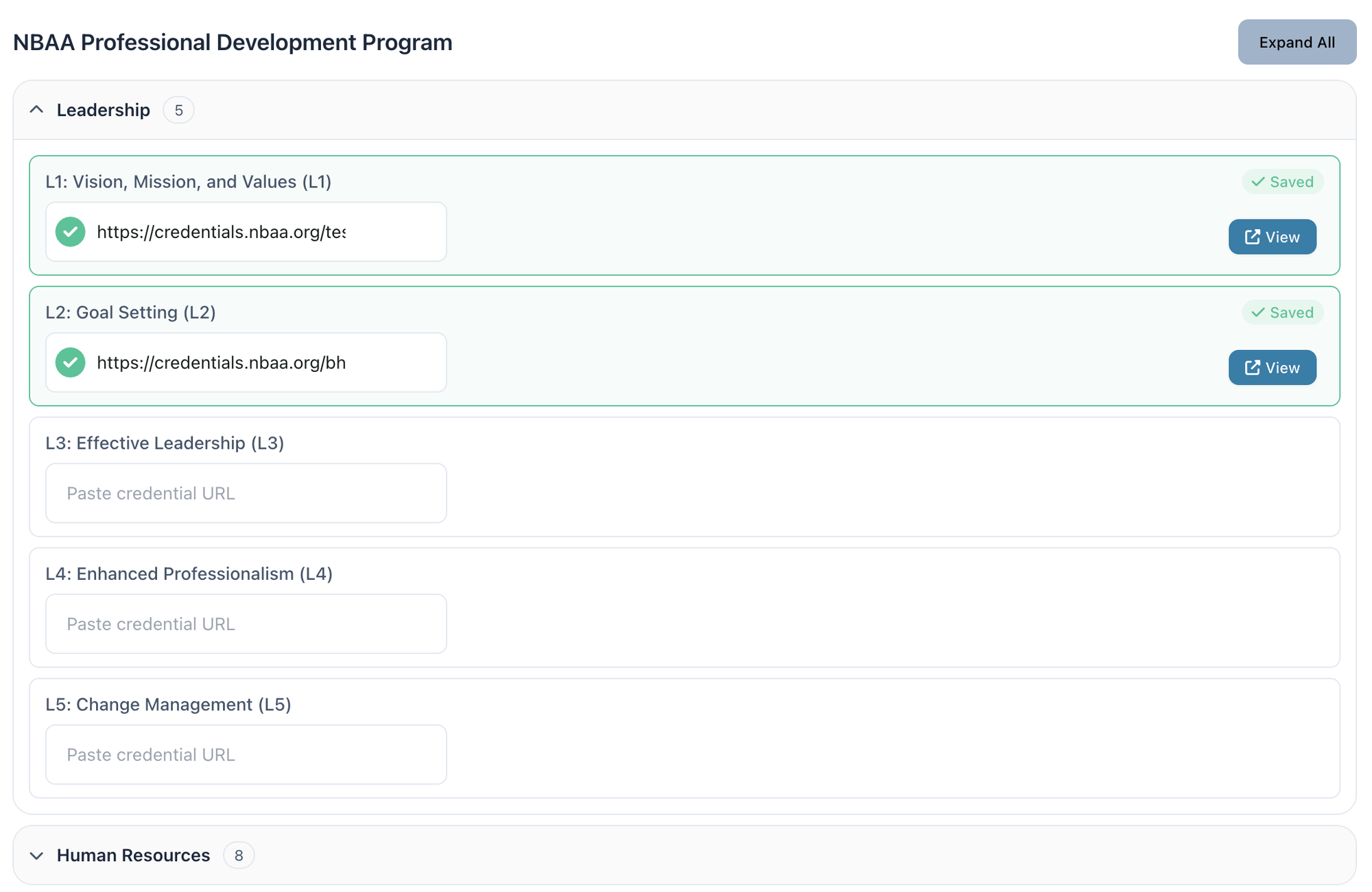
The National Business Aviation Association (NBAA) offers a wide range of certifications that highlight leadership, management, and safety acumen — from the Certified Aviation Manager (CAM) credential to Professional Development Program (PDP) modules covering everything from Human Factors to Strategic Management.
Now, pilots can easily paste their public NBAA credential link directly into their Flying Company profile. This allows Operators to verify a pilot’s credentials in seconds — giving weight to those who have invested time in advancing their knowledge of business aviation best practices.
Examples include:
- Certified Aviation Manager (CAM)
- Safety Manager Certificate
- Professional Development Training courses (Leadership, Human Resources, Operations, Aircraft Maintenance, and more)
Each one is a visible indicator that a pilot takes their profession seriously — not just as a job, but as a discipline.
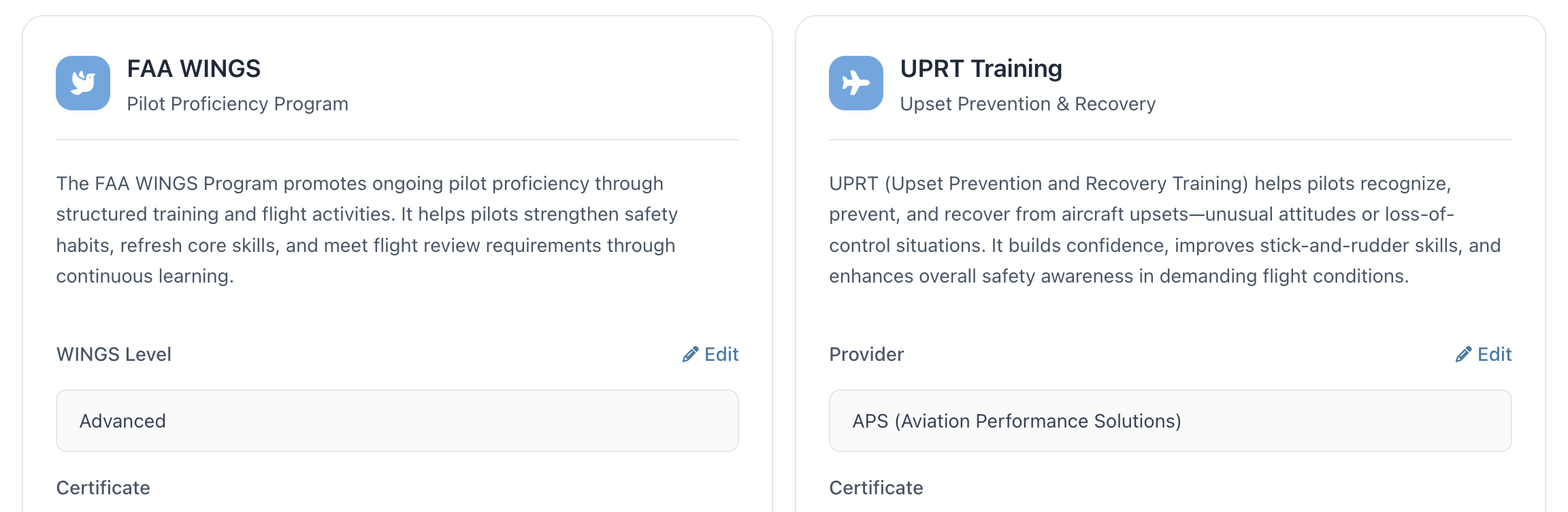
2. FAA WINGS Program
The FAA WINGS Pilot Proficiency Program encourages ongoing education and recurrent training. Pilots can earn Basic, Advanced, and Master levels of WINGS certificates by completing safety seminars, flight reviews, and proficiency activities.
On Flying Company, these certificates can be uploaded to the pilot’s profile to demonstrate an ongoing commitment to safe operations — not because they’re required, but because they’re the right thing to do. That kind of attitude is what separates a good pilot from a professional one.
3. Upset Prevention and Recovery Training (UPRT)
Every pilot hopes never to need UPRT, but those who complete it are preparing for the unexpected. UPRT training equips pilots with the skills and mindset to safely recover from unusual attitudes and aerodynamic upsets — scenarios that are statistically rare, but often catastrophic when mishandled.
By uploading proof of completed UPRT training, pilots can demonstrate a proactive safety mindset. It’s an unmistakable signal to Operators that this pilot doesn’t just meet minimums — they exceed them.
Why This Matters for Operators
For Operators, the Credentials page brings transparency and trust into the hiring process. When reviewing pilot profiles, they can now see not just experience and ratings, but a visible record of a pilot’s professionalism, training, and safety culture.
These aren’t arbitrary checkboxes — they’re meaningful signals that correlate with better decision-making, stronger crew resource management, and safer operations. In short, they help Operators answer the question that’s hardest to quantify: Is this someone I can trust in the cockpit?
Building a More Professional Industry — One Profile at a Time
This update marks the third major step in our ongoing effort to elevate professionalism and safety across business aviation. We began with Professionalism by Design, introducing LLC and Independent Contractor classifications. Then came Post-Flight Safety Reports for Trusted Partner Program operators. Now, with Pilot Credentials, we’re continuing to build a clearer, more objective way for pilots to showcase their professionalism — and for operators to hire with confidence.
Is there a different professional pilot credential that we should include? Email us at info@flyingcompany.com and let us know