Flight Safety Master Aviator

At Flying Company, we’ve always believed that professionalism in aviation is something you build over time.
It shows up in how pilots train, how they prepare, and how seriously they take their responsibility to the people sitting behind them. Logbook hours and type ratings matter, but they’ve never told the whole story. That’s why we’re excited to announce that FlightSafety International’s Master Aviator recognition can now be added directly to a pilot’s Flying Company profile.
This is a credential that deserves context — and visibility.
What the Master Aviator Program Represents
FlightSafety’s Master Aviator designation is not a one-time certificate or a marketing label. It’s earned through advanced, ongoing training at FlightSafety International, one of the most respected training organizations in aviation.
Pilots who hold this recognition have committed to training that goes beyond standard recurrent. The program emphasizes scenario-based decision making, aircraft-specific mastery, and continued proficiency over time. Just as important, Master Aviator recognition is aircraft-specific. A pilot who earns it on a Gulfstream, Falcon, or Citation has trained deeply on that aircraft’s systems, performance, and operational demands — not just the basics required to stay current.
That distinction matters.
You can learn more about the program directly from FlightSafety International.
Why This Matters for Operators
When operators evaluate pilots, they’re often left piecing together an incomplete picture. Total time, time in type, and last recurrent date all help — but they don’t always reveal how a pilot approaches risk, preparation, and complex decision-making.
A FlightSafety Master Aviator credential adds meaningful signal. It tells operators that this pilot has invested in advanced training, maintained a disciplined training cadence, and chosen to hold themselves to a higher standard under FlightSafety’s curriculum.
For chief pilots, schedulers, dispatchers, and safety managers, that’s not just nice to know. It’s a real differentiator — and one that aligns directly with safe, professional flight operations.
A Signal of Professional Development
From a pilot’s perspective, earning Master Aviator recognition reflects intent.
It shows a commitment to continuous improvement. It reflects a mindset that values preparation over complacency and learning over minimum compliance. In short, it signals professionalism.
That’s exactly what we mean when we talk about the Whole Pilot — not just what’s written in the logbook, but how a pilot trains, thinks, and evolves throughout their career.
How It Appears on Flying Company
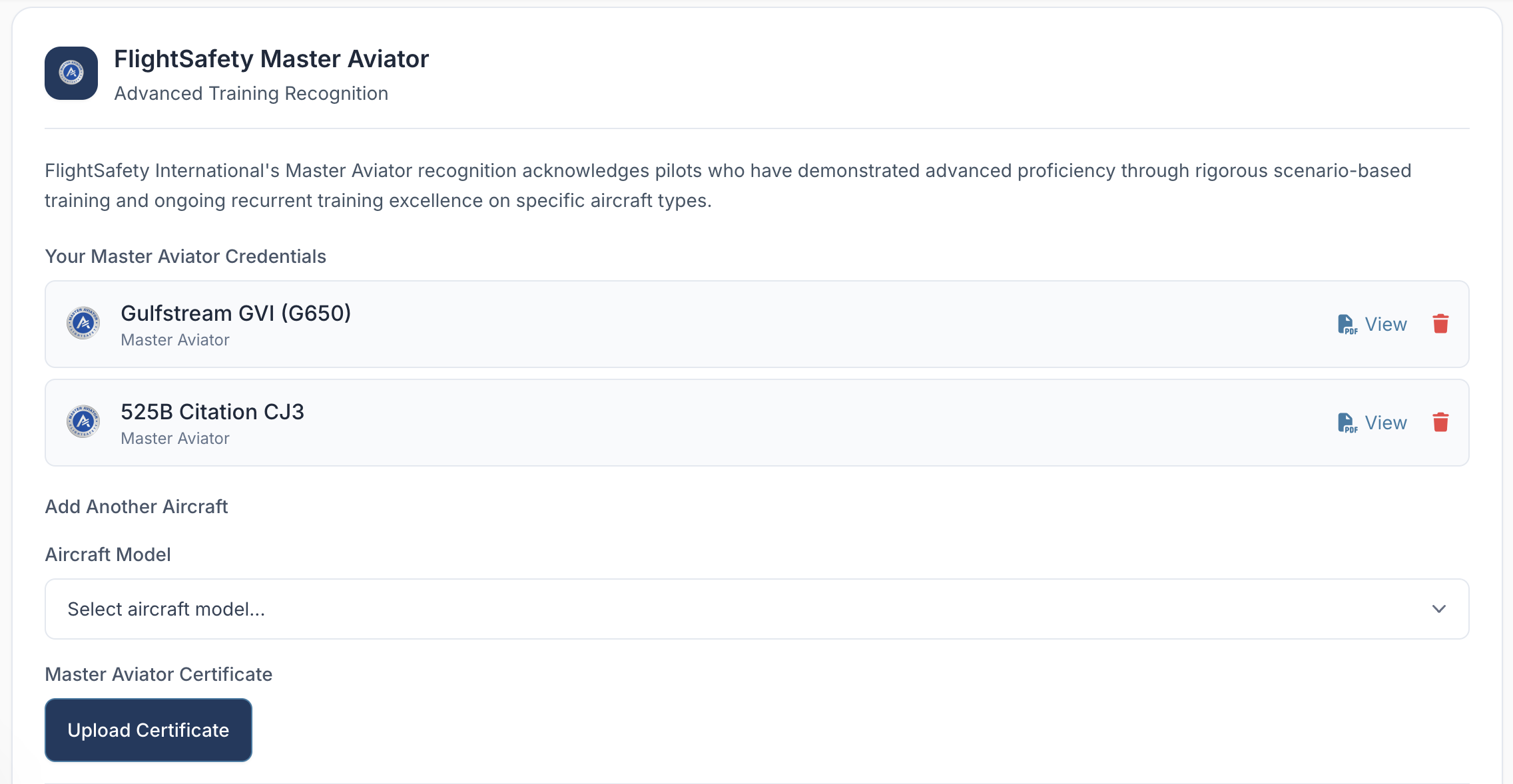
Pilots can now add FlightSafety Master Aviator directly on the Credentials page of their Flying Company profile. The credential is tied to the specific aircraft model it applies to, and pilots can upload their certificate for operators to review.
Once added, it’s visible anywhere operators are evaluating pilots — including the Pilot Card, the public pilot profile, and the Pilot History Form. The goal is simple: make important training visible at the moment it matters most.
Built for Trust, Not Marketing
Recognizing credentials like FlightSafety Master Aviator is part of a larger effort at Flying Company to bring clarity and trust into professional pilot hiring.
Great pilots already do this work. Great operators already value it. Our job is to make sure that effort is visible, structured, and respected — without turning it into noise.
We’re proud to highlight FlightSafety International and the role they play in raising the standard across business aviation, and we’re excited to support pilots who choose to train at that level.
Because building the safest way to hire pilots starts with recognizing the people who take safety seriously — long before the trip ever appears on the schedule.