Business Classification

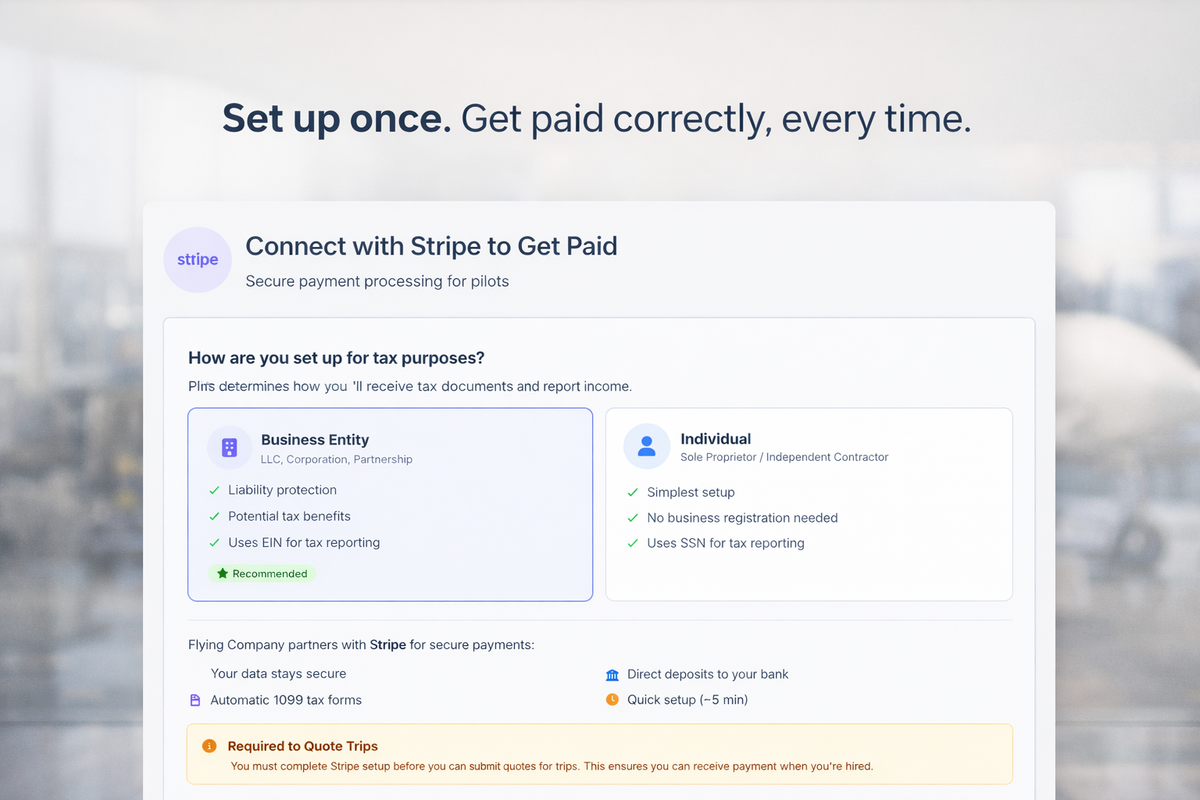
One of the realities of contract flying is that, long before a pilot ever steps onto an aircraft, there’s paperwork, payment, and tax structure sitting quietly in the background. If that foundation isn’t set up correctly, it creates friction for pilots, operators, and flight departments alike.
Until now, that setup has largely lived outside the staffing conversation. Pilots figure it out on their own. Operators ask for clarification later. Dispatchers chase missing information. And somewhere in the middle, time gets wasted and risk gets introduced.
We decided to pull that entire process forward and make it part of the pilot onboarding experience.
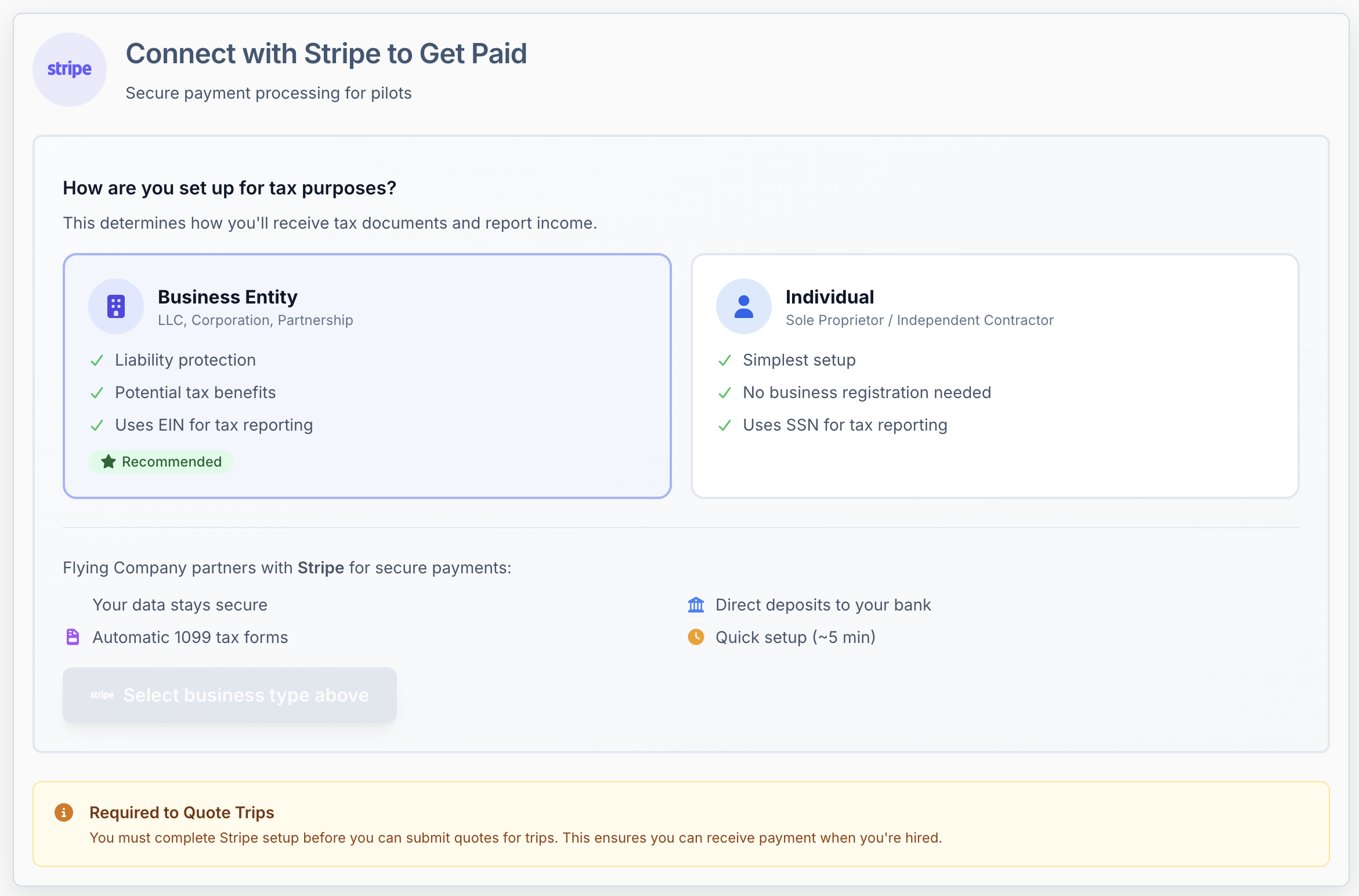
Business Entity or Independent Contractor — Clearly Defined from Day One
Pilots creating a free Flying Company account can now connect with Stripe and register their business classification directly inside the platform. Whether they operate as an individual independent contractor or through a business entity such as an LLC or corporation, the setup is quick, secure, and guided.
Once completed, that information automatically flows everywhere it needs to:
• The pilot’s professional profile that operators see
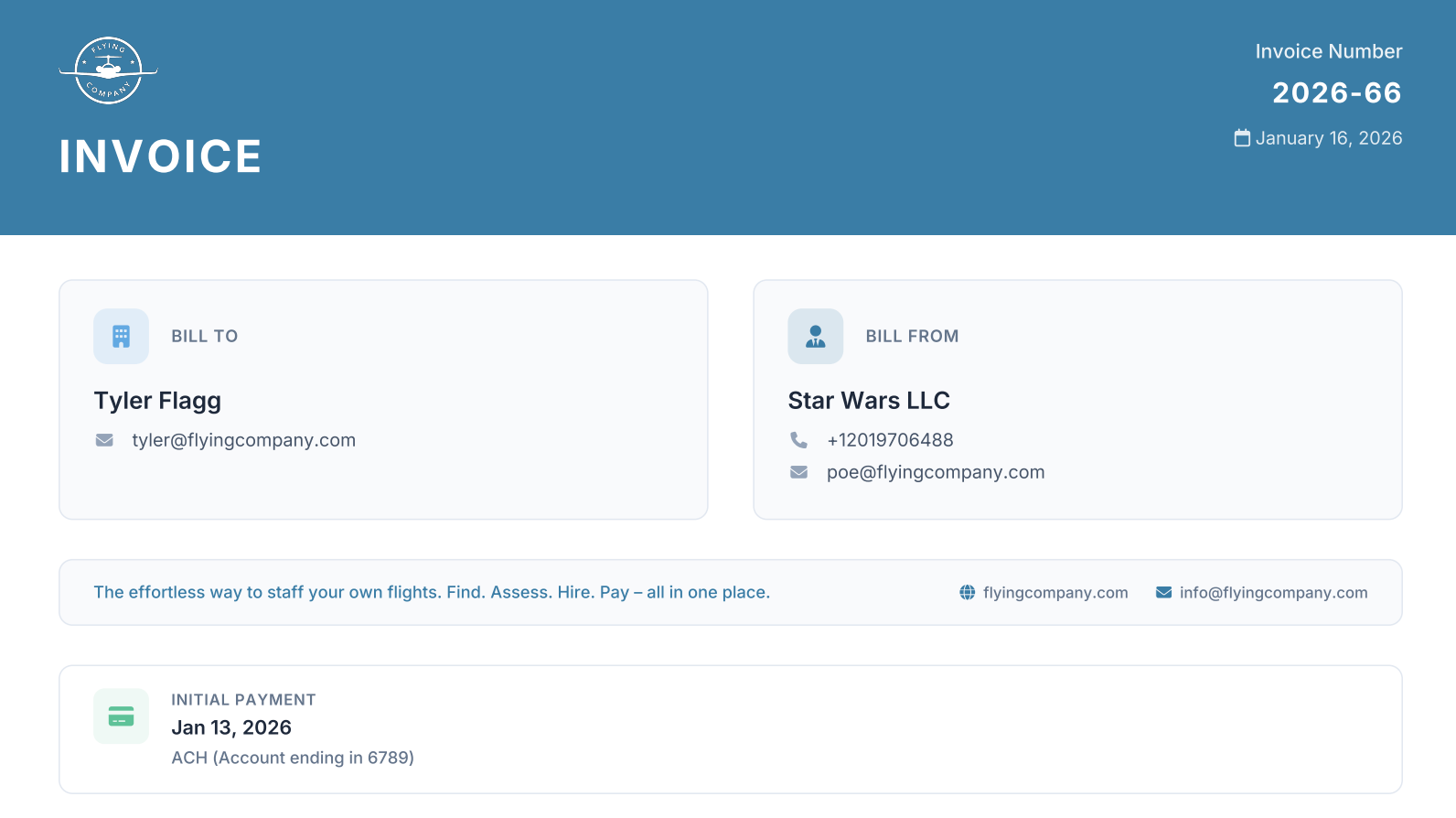
• Invoices generated for completed trips
• Tax documentation at year-end
• Payment routing through Stripe
No duplicate data entry. No mismatched names. No confusion about who is being paid and how.
Just one clean source of truth.
Helping Pilots Put Their Best Foot Forward
Many professional contract pilots operate through a business entity. Some do it for liability protection. Some for tax flexibility. Some simply because it signals professionalism to high-end operators.
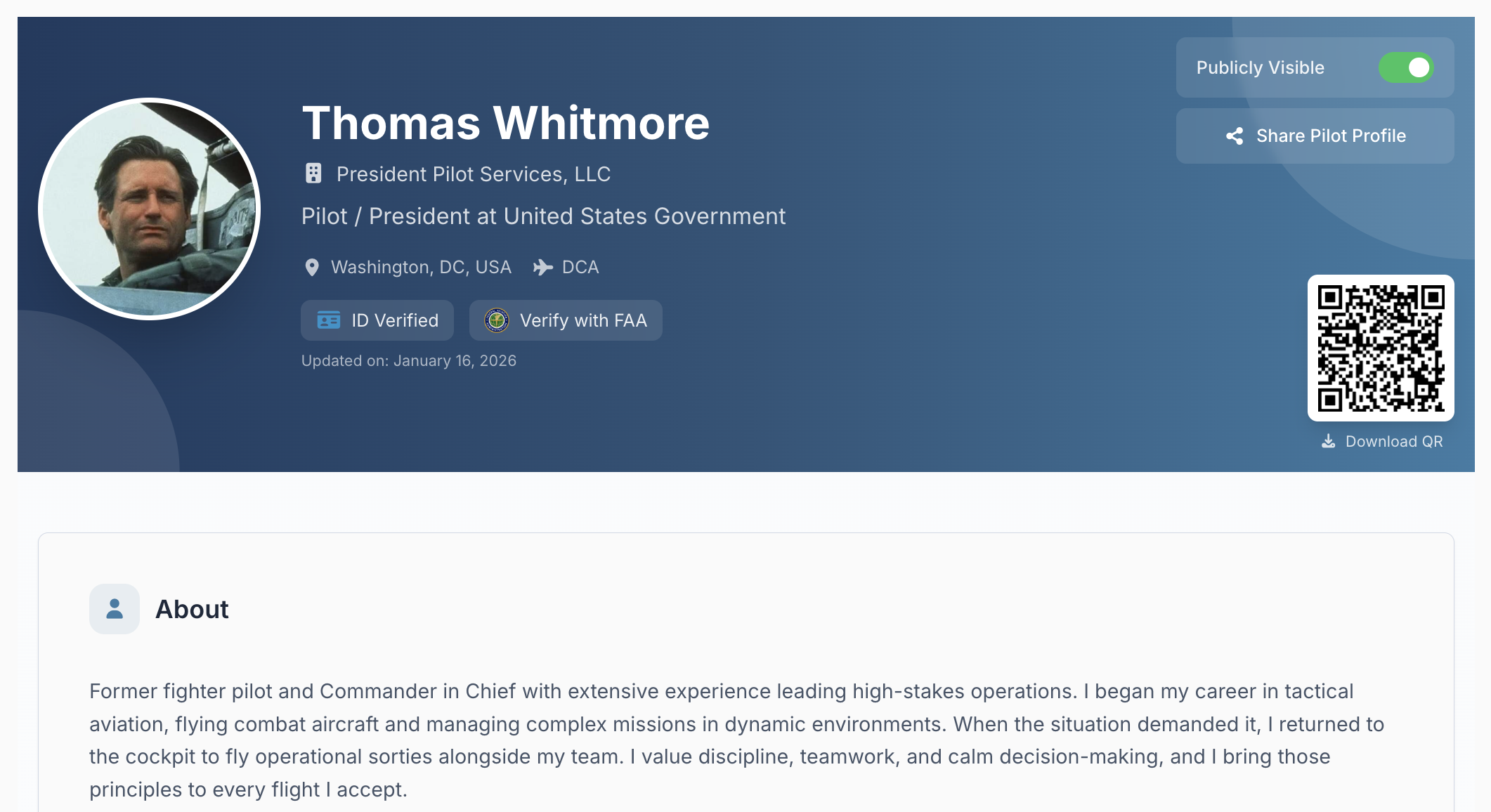
Now, when a pilot has an LLC or corporation, that business name appears directly on their Flying Company profile and invoices. It allows them to present themselves to operators the same way established management companies and aviation service providers do — as a professional business, not just an individual.
For pilots who prefer to operate as independent contractors, that option is equally supported. The platform simply reflects whichever structure they choose, accurately and transparently.
Giving Operators the Information They Need
From the operator side, this solves another quiet but important problem: understanding who they are actually hiring.
Some flight departments prefer to hire pilots operating through business entities. Others are comfortable with independent contractors. Until now, that distinction often surfaced late in the process, sometimes after a quote was accepted or an invoice was issued.
With the new setup, operators see the pilot’s business classification clearly in the professional profile before making a hiring decision. That allows them to align staffing choices with internal policies, insurance requirements, or risk management preferences — without extra back-and-forth.
Reducing Friction for Everyone
The real benefit here is not just compliance or paperwork. It’s operational smoothness.
Dispatchers no longer need to chase missing tax forms. Pilots no longer need to resend business details trip after trip. Operators no longer need to reconcile invoice names that don’t match payment records.
Everything is set up once, verified, and reused automatically across every trip.
That’s less busy-work, fewer errors, and a system that scales cleanly as pilots and operators do more business together.
Built for the Long Term
Flying Company isn’t just about filling trips. It’s about building a marketplace that works at the level of real business aviation operations. That means treating pilots as professionals, giving operators the tools to make informed decisions, and putting reliable infrastructure under every transaction.
Business classification setup is one of those foundational features. You don’t think about it much when it works — but when it’s missing, everyone feels the pain.
Now it just works.